
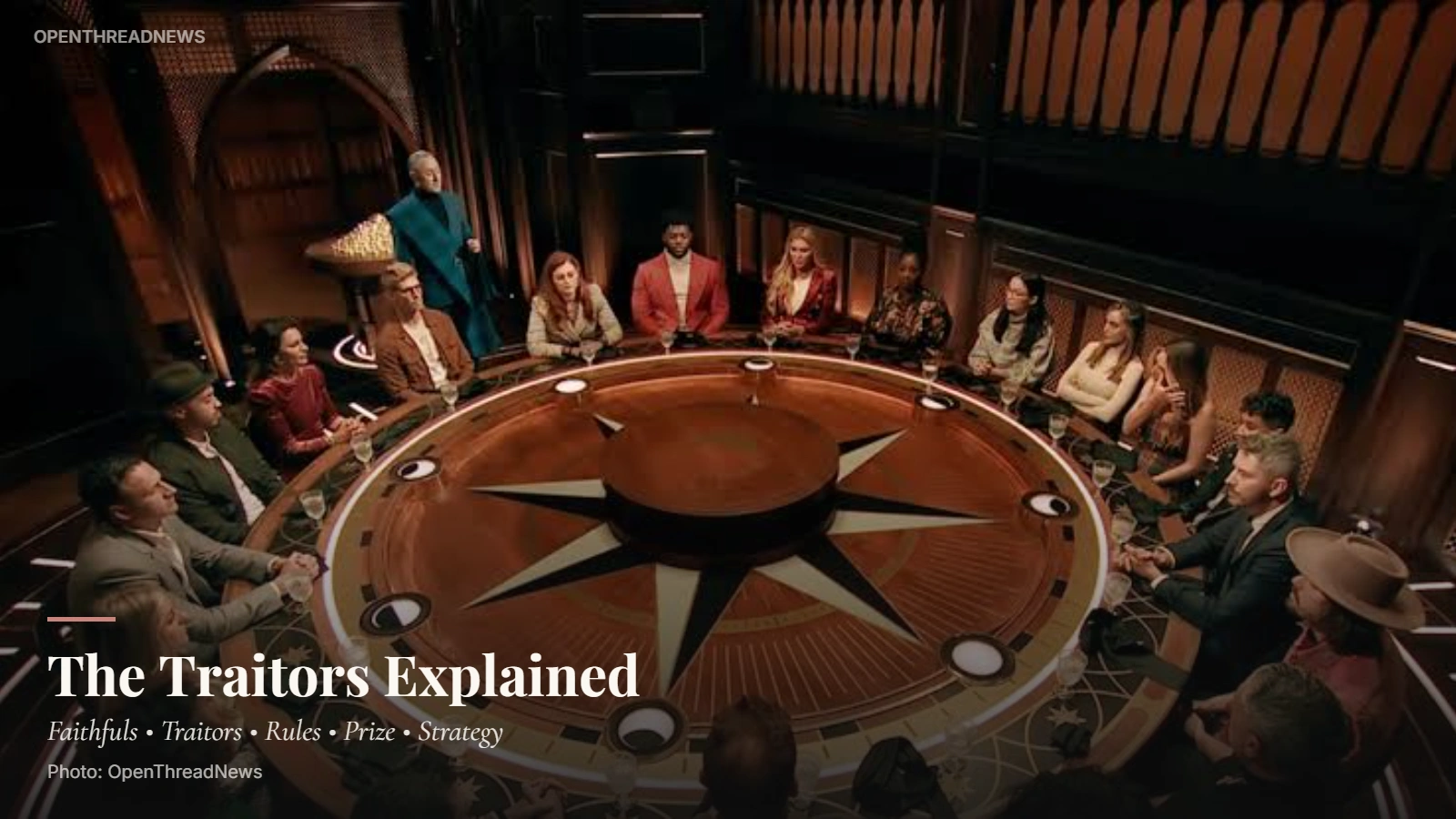
The Traitors looks like a murder mystery, but the audience is not usually solving the same puzzle as the players. Viewers know who the Traitors are. The Faithfuls do not. The suspense comes from watching a lie survive breakfast, a correct accusation fail at the Round Table and a trusted alliance become the reason someone loses the game.
The core format is simple: everyone works together to build a prize pot, a hidden minority removes players in secret, and the larger group tries to identify them before the final vote. What makes the show feel complicated is that the rules keep forcing cooperation between people with opposite goals.
As of August 2026, Peacock has completed four seasons of its original U.S. edition and ordered a fifth. A separate all-civilian version, The Traitors: New Blood, premieres on NBC on September 17, 2026, before streaming on Peacock the following day.
New-viewer note: Everything before “The Four U.S. Seasons and Winners” is spoiler-light. The season table near the end names all four winners and explains each finale.
Correction, August 6, 2026: An earlier version incorrectly said Faithfuls do not know their own status and suggested they may share the prize with a surviving Traitor. Faithfuls know they are Faithfuls; if any Traitor remains when the game ends, the Faithful finalists receive none of the prize. The article also previously implied that contestants live at Ardross Castle. The castle is the primary filming location, while the cast stays off-site.
The Traitors at a Glance
| Detail | Answer |
|---|---|
| Original format | The Dutch series De Verraders, launched in 2021 |
| U.S. premiere | January 12, 2023 |
| Host | Alan Cumming |
| Filming location | Ardross Castle in the Scottish Highlands |
| Core roles | Faithfuls and Traitors |
| Main objective | Build the prize pot while eliminating the opposing side |
| Maximum U.S. prize | Up to $250,000 |
| Current U.S. editions | Peacock’s original series and NBC’s all-civilian New Blood |
| Original-series status | Four completed seasons; Season 5 ordered |
What Is The Traitors?
The Traitors is a social-deduction competition based on the Dutch format De Verraders. A cast gathers at Ardross Castle in Scotland and completes missions to add money to a shared prize pot. Hidden inside the group are several Traitors selected to deceive and eliminate the other contestants.
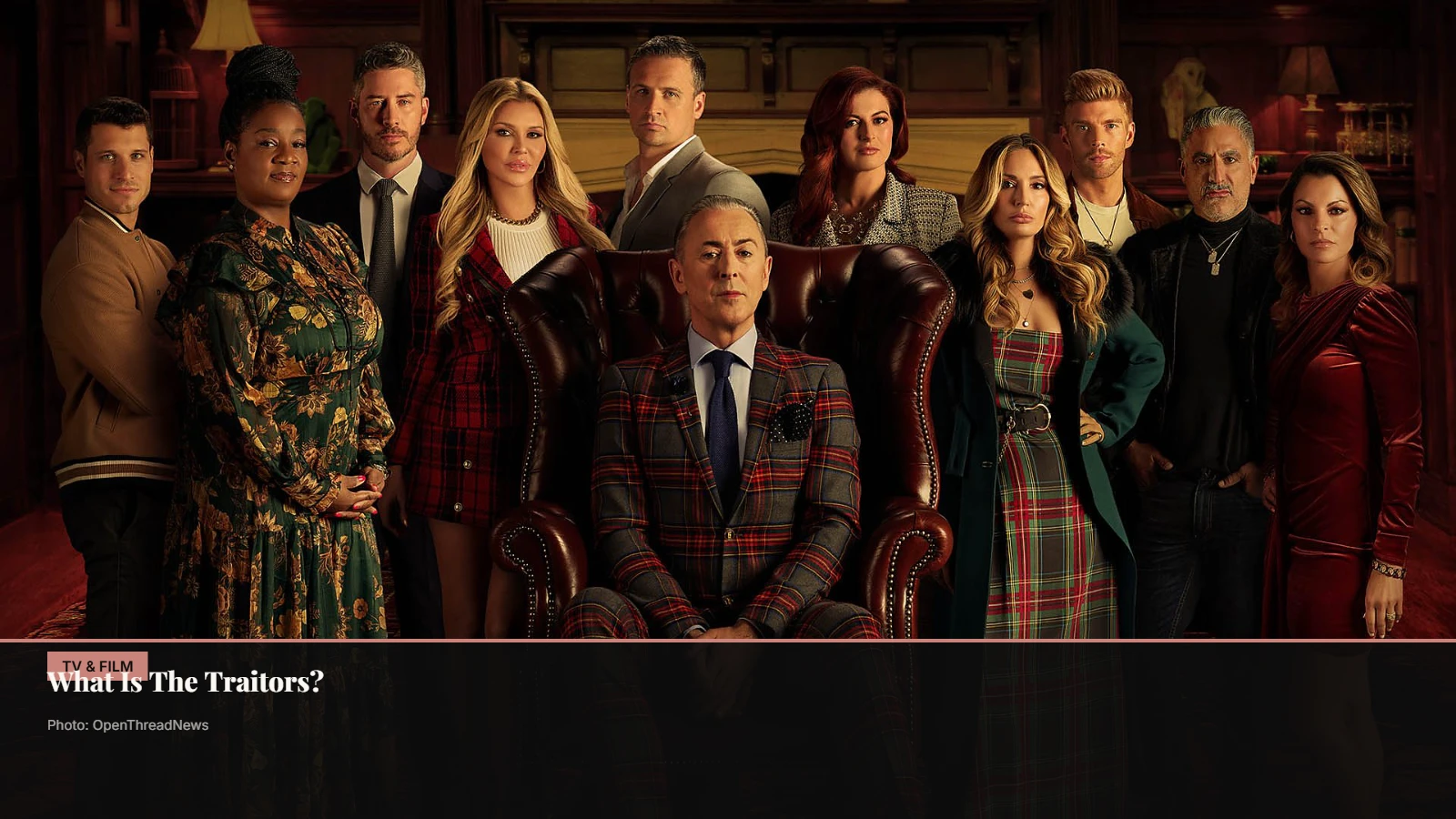
At the beginning of the game, every player who is not selected as a Traitor is a Faithful. Faithfuls know that they are Faithfuls; what they do not know is the identity of the Traitors. The Traitors normally know one another and meet in private, although individual seasons can introduce twists that delay or complicate that knowledge.
The audience is generally shown the Traitors from the beginning. That makes the series less of a traditional whodunit and more of a study in dramatic irony. We can see who is lying. The tension comes from whether the lie will work.
The number and type of contestants have changed. Season 1 paired 10 reality personalities with 10 people who had no established television profile. Seasons 2, 3 and 4 shifted to casts made entirely of reality stars, athletes, entertainers and other public figures.
Faithfuls and Traitors: What Is the Difference?
| Faithfuls | Traitors | |
| Know their own role? | Yes | Yes |
| Know the Traitors’ identities? | No | Usually know the other active Traitors |
| Compete in missions? | Yes | Yes |
| Vote at the Round Table? | Yes | Yes |
| Choose the overnight murder? | No | Yes |
| Can win the prize? | Yes, by removing every Traitor before ending the game | Yes, by surviving when the game ends |
A Traitor is not the same thing as the saboteur on The Mole. Traitors usually want the missions to succeed because the same prize pot is available to them if they reach the end. Their secret job is social, not mechanical: look like a useful Faithful, redirect suspicion and decide which opponents are too dangerous to keep.
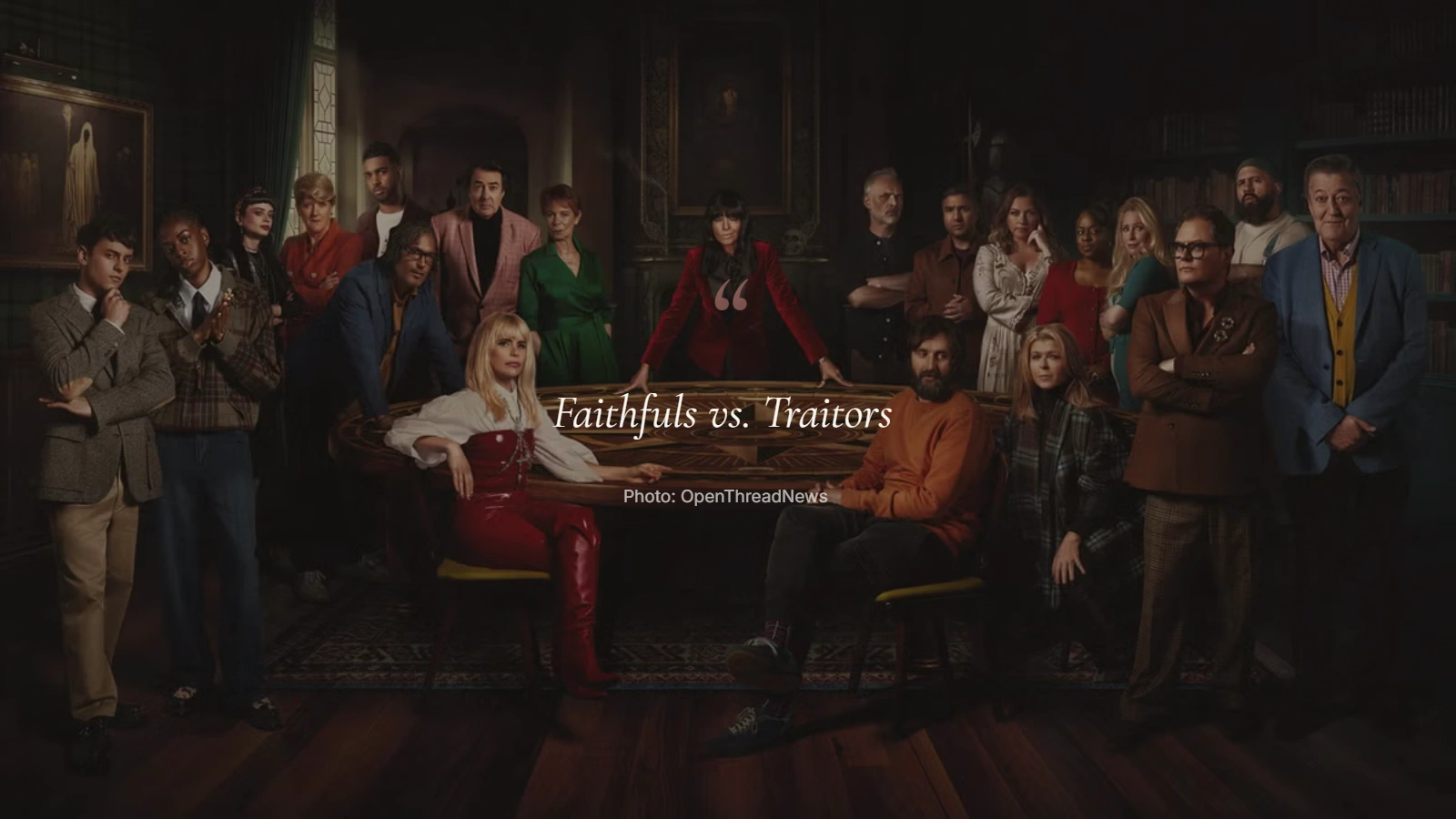
Faithfuls have the opposite problem. They must identify the Traitors without access to secret evidence, while knowing that any confident accusation can make them look suspicious or turn them into the next murder target.
How a Typical Day Works
The exact sequence can shift when production introduces a twist, but most episodes move through five recognizable stages.
1. Breakfast Reveals the Murder
The surviving players arrive for breakfast in staggered groups. The Traitors already know whom they selected the previous night; the Faithfuls work it out by watching who enters and who never appears.
Breakfast is not downtime. It resets the social game. Players study reactions, revisit the previous Round Table and ask why the Traitors chose one person over another. A calm response can look rehearsed. A shocked response can look theatrical. Because the evidence is almost entirely behavioral, even an ordinary expression can become a theory by lunch.
2. The Mission Builds the Prize Pot
Faithfuls and Traitors then compete together in a physical, mental or puzzle-based mission. Successful missions add money to the prize pot, which can reach as much as $250,000 in the U.S. version.
The missions rarely expose a Traitor directly. Their strategic value comes from everything around the task: who takes control, who protects whom, who shares information and who gains access to a shield or another advantage. The money is real, but the mission is also a social pressure test.
3. Shields Protect Players From Murder
A shield normally protects its holder from the next murder. It does not provide immunity from the Round Table, so a shielded player can still be banished by the group.
Traitors can win shields too. A Traitor with protection may use it to support a Faithful-looking story, conceal who was actually vulnerable or influence the murder discussion. Some seasons keep shield ownership secret; others make it public. The protection remains narrow unless Alan announces a different rule for a specific twist.
4. The Round Table Ends in a Banishment
At the Round Table, every remaining contestant debates who might be a Traitor and casts a vote to banish one player. Traitors vote alongside the Faithfuls and can vote against one another.
The banished player normally reveals whether they were Faithful or Traitor after leaving the table. A successful vote gives the Faithfuls information but does not guarantee that every Traitor is gone. An incorrect vote removes an ally and gives the hidden team more control over the numbers.
In Seasons 3 and 4, the contestant banished at the final Round Table left without revealing their allegiance. The reveal is therefore the standard rule, not an absolute promise in every endgame.
What Happens if the Round Table Vote Is Tied?
The tied players are allowed to defend themselves again, and the other contestants revote without the tied players casting ballots. If the revote is still tied, the rules can move to a sudden-death decision determined by chance. Season 3 produced the first official U.S. Round Table tie, between Danielle Reyes and Ivar Mountbatten.
5. The Traitors Choose a Murder
After the Round Table, the active Traitors meet privately in the turret. They discuss which Faithful presents the greatest threat and usually agree on one player to murder.
“Murder” is the show’s theatrical word for elimination. The selected contestant is not part of the next day’s breakfast and has no opportunity to defend themselves. Traitors cannot normally murder another Traitor, but they can help banish one at the Round Table when an ally becomes too exposed.
Some murders happen through special devices—a poisoned drink, a public banquet or a face-to-face confrontation—but the effect is the same: one player is removed outside the group vote.
What Does Recruitment Mean?
When the number of Traitors falls, the remaining Traitor or Traitors may be allowed to recruit a Faithful. The invited player changes sides and must begin lying to the same people who trusted them hours earlier.
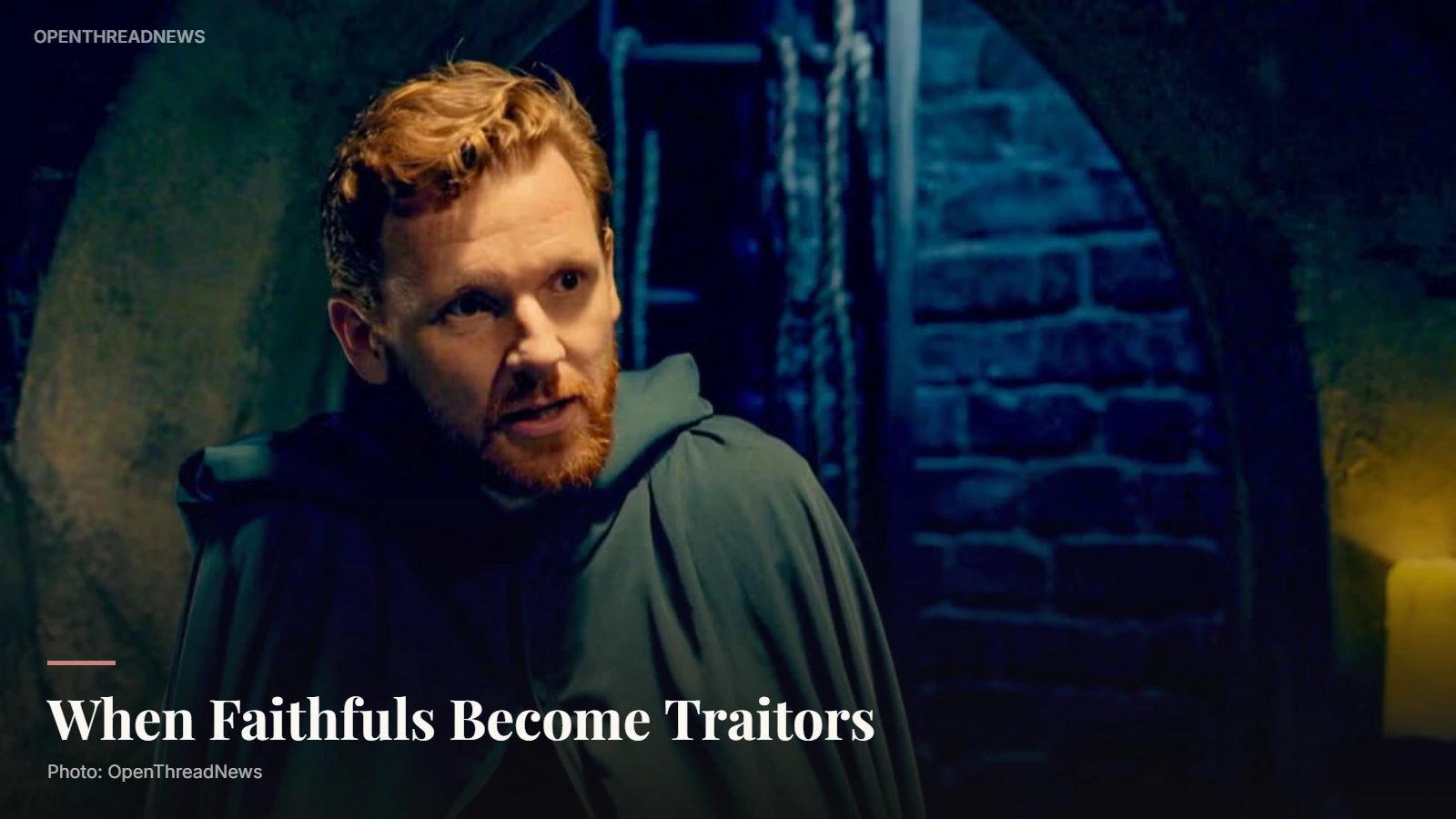
A standard recruitment offer can sometimes be declined. A Join or Die ultimatum cannot be rejected without leaving the game: the Faithful must become a Traitor or be murdered. The ultimatum first appeared late in Season 2 and has since become one of the format’s most consequential endgame tools.
Recruitment is why counting exposed Traitors is not enough. The Faithfuls may correctly remove an original Traitor and still face the same number of enemies after a replacement is added. It also creates a difficult question for viewers: was a player behaving suspiciously all season, or did their game change only after recruitment?
Individual seasons can add other variations. Season 4 introduced a Secret Traitor twist involving Donna Kelce whose role operated differently from the standard opening selection. Those devices are twists, not permanent rules, and should not be used to explain the base format.
How the Finale and Fire of Truth Work
The final stage is designed to test whether trust has outlasted evidence.
After the last conventional mission and banishment, the remaining players gather at the Fire of Truth. Each person chooses either End the Game or Banish Again. The game does not stop until every surviving player chooses to end it, or until only two players remain and no further banishment is possible.
A vote to banish again triggers another elimination vote. The process can repeat, which means Faithfuls may remove other Faithfuls simply because nobody can prove that the group is clean.
Once the game ends, the remaining identities decide the money:
- If every survivor is a Faithful, the Faithful winners split the prize pot.
- If at least one Traitor remains, the surviving Traitor or Traitors take the prize and the Faithful finalists receive nothing.
Faithfuls and Traitors do not split the money across roles. That all-or-nothing rule is what makes the final decision so brutal: a Faithful who ends the game one vote too early can survive the entire season and still leave with zero.
How the Prize Money Works
The U.S. prize pot can grow to $250,000, but it is not automatically full. Contestants add money by completing missions, and the final total depends on how much the group earns across the season.

This creates a useful contradiction. Faithfuls and Traitors are enemies in the social game, but financial partners during missions. Deliberately destroying the group’s performance would reduce the amount a Traitor could eventually steal, so the format does not reward obvious sabotage.
The final number is divided only after the winning side is known. One successful Traitor can claim everything. Multiple surviving Traitors may share it. A clean group of Faithfuls divides it among the Faithful winners who remain when the game ends.
Why The Traitors Is Harder Than It Looks
The show is often described as a game of detecting lies. That is only part of it. The deeper problem is that the game gives the Faithfuls very little reliable evidence and punishes them for looking too capable.
Correct Is Not the Same as Safe
A Faithful can identify a Traitor and still play badly. If they accuse too early, fail to build a coalition or reveal how much they understand, the Traitors can murder them before the group acts. Good detection matters only when it is paired with timing and social protection.
Trust Is Both Evidence and a Weapon
Players naturally trust people who comfort them, vote with them and share information. Those are also the exact behaviors a skilled Traitor can perform. The best Traitor games do not depend on constant lying; they depend on creating relationships that remain emotionally real even while the role is hidden.
The Loudest Theory Can Replace the Best Theory
Round Tables reward persuasion. Once the room agrees on a narrative, neutral behavior starts being interpreted as proof. A nervous Faithful may look guiltier than a calm Traitor, while a confident Faithful may appear to be controlling the vote.
Removing a Traitor Can Make the Game Harder
A banishment is not the end of the mystery. Recruitment can reset the hidden team, and a newly recruited Traitor may have a cleaner reputation than the originals. The Faithfuls must keep updating their theory instead of treating one correct reveal as confirmation that every previous assumption was right.
The Endgame Rewards Social Position
A player does not need to be the season’s most accurate detective to win as a Faithful. They need enough information to remove every Traitor and enough trust to survive the final banishments. For a Traitor, the ideal finale is not merely one with weak opponents; it is one with opponents who believe the relationship more than the evidence.
That is why the show keeps producing endings that feel both strategically logical and personally devastating.
What Does Alan Cumming Actually Do?
Alan Cumming is the host, executive producer and theatrical authority of the U.S. series. Under the standard opening format, he performs the selection by tapping the chosen Traitors on the shoulder after production interviews and discussions determine the lineup. He also introduces missions, announces twists, oversees the Round Table and conducts the finale.
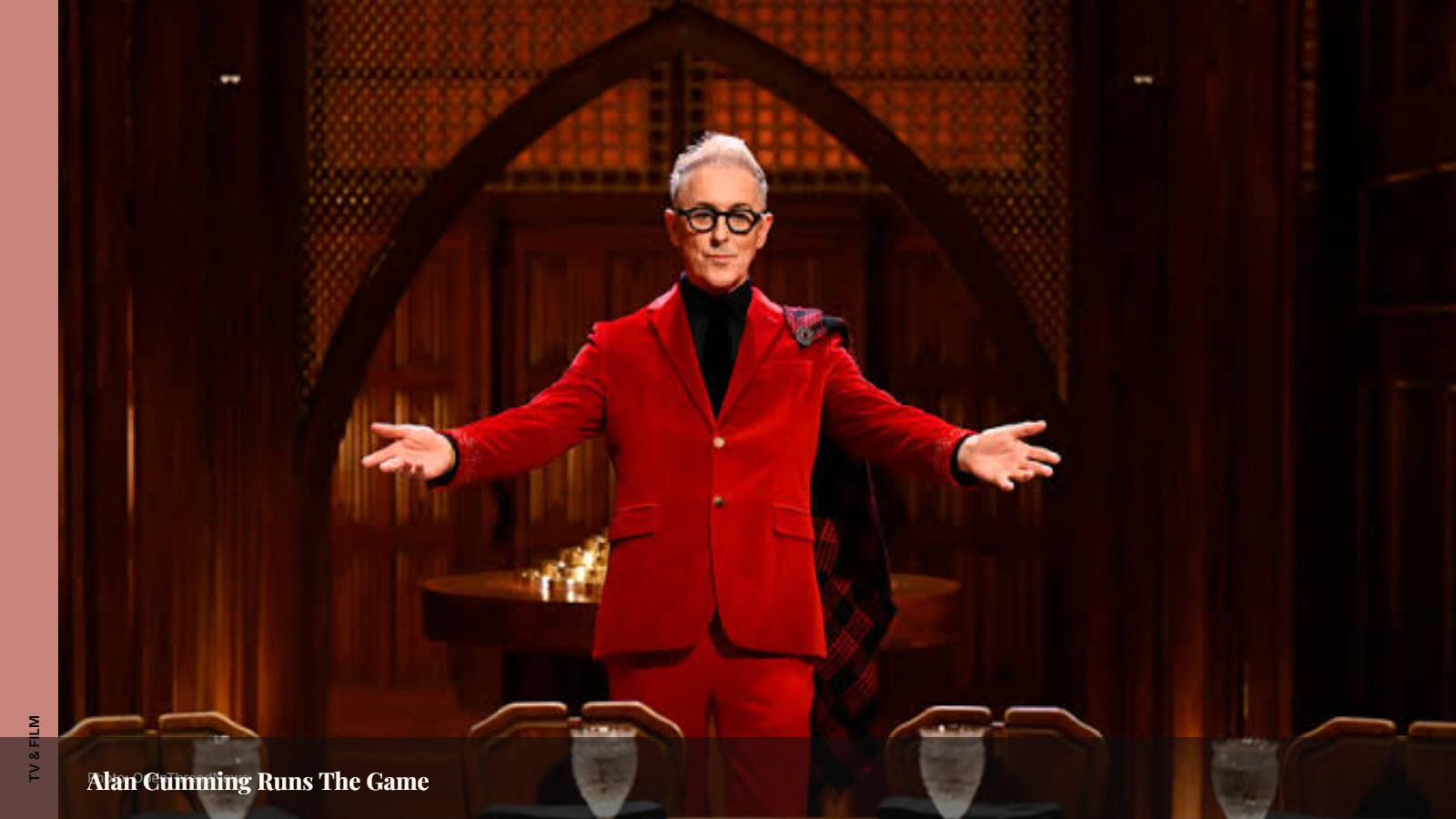
He does not cast banishment votes or secretly decide which player leaves. His influence is tonal rather than strategic: the capes, kilts, arch delivery and mock-gothic menace turn a rules-heavy social game into a piece of camp theater.
The performance has become inseparable from the American edition. Cumming won the Emmy for Outstanding Host for a Reality or Reality Competition Program in 2024 and 2025.
Where Is The Traitors Filmed?
The U.S. series is filmed at Ardross Castle, a 19th-century estate in the Scottish Highlands. Its interiors, grounds and surrounding landscape supply the show’s visual language: candlelight, stone corridors, sweeping lawns and a sense that every conversation is happening inside an elaborate trap.
The contestants do not actually move into the castle, despite the way the series is framed. Filming takes place there, while the cast stays off-site under controlled production conditions. The distinction matters because the show is an immersive set, not a conventional shared-house reality series such as Big Brother.
How the U.S. Cast Format Has Changed
The American franchise began with a genuine split experiment. The Traitors Season 1 featured 10 reality personalities and 10 civilian contestants. The mix gave established strategists public reputations while the newcomers arrived without television histories to analyze.

Peacock changed direction in Season 2, moving to a cast made entirely of reality icons and notable public figures. Season 3 and Season 4 continued that celebrity model, drawing from Survivor, Big Brother, Bravo, The Bachelor, The Challenge, sports, music and entertainment.
The civilian concept is now becoming its own series. The Traitors: New Blood premieres on NBC on September 17, 2026, followed by next-day streaming on Peacock. It uses a cast of 22 civilian contestants selected from more than 80,000 applicants, while Alan Cumming remains host.
Peacock’s original edition has also been renewed through Season 5, so the two versions are designed to coexist rather than replace one another.
Why the Format Works So Well on Television
The audience knows more than the Faithfuls but less than production. That gives almost every scene two meanings.
A breakfast conversation is both grief and performance. A mission alliance may be practical in the moment and fatal at the Round Table. A Traitor can tell the truth about nearly everything except the one fact that matters, while a Faithful can sound dishonest because they are frightened, defensive or simply bad at explaining themselves.
The format also understands that certainty is more entertaining when it is fragile. There is no forensic evidence, no private camera feed for the contestants and no reliable personality test that reveals a liar. The game turns confidence, friendship and reputation into evidence—then demonstrates how unreliable all three can be.
The production completes the effect. Ardross Castle gives the series a world of its own; the score treats gossip like a thriller; and Cumming performs the rules with enough wit to keep the morbidity playful. The result is not just a competition about finding Traitors. It is a show about what people decide to believe when proof is unavailable.
That combination translated into measurable success. Season 2 became the top unscripted U.S. streaming series during its launch week, according to Nielsen. The Traitors then won the Emmy for Outstanding Reality Competition Program in 2024 and 2025 and received another nomination in 2026.
The Four U.S. Seasons and Winners
Full spoilers begin here. The table reveals each season’s winner, role and ending.
| Season | Cast format | Winner or winners | Winning role | Final prize | What defined the ending |
| Season 1 | 10 reality personalities and 10 civilians | Cirie Fields | Traitor | $250,000 | Cirie ended the game with Faithfuls who trusted her and claimed the full pot alone. |
| Season 2 | Reality stars and public figures | Chris “CT” Tamburello and Trishelle Cannatella | Faithfuls | $208,100 | The last Traitor was gone, but CT and Trishelle banished fellow Faithful MJ before ending the game. |
| Season 3 | Reality stars and public figures | Dolores Catania, Dylan Efron, Gabby Windey and Lord Ivar Mountbatten | Faithfuls | $204,300 | All four finalists correctly ended the game after the last Traitor had been removed. |
| Season 4 | Reality stars, entertainers and athletes | Rob Rausch | Traitor | $220,800 | Rob helped remove his fellow Traitor, reached the final two with Maura Higgins and took the entire pot. |
Season 1 remains the cleanest demonstration of a dominant Traitor game. Season 2 shows why Faithfuls may keep banishing even after the hidden team is gone. Season 3 proves that a larger group can share the money. Season 4 is the warning built into the format: one trusted Traitor at the final reveal is enough to erase every Faithful’s work.
Frequently Asked Questions
Do the Faithfuls know they are Faithfuls?
Yes. Every contestant knows their own role. Faithfuls know they were not selected as Traitors; they do not know who the Traitors are, and recruitment means the answer can change during the season.
Does the audience know who the Traitors are?
Usually, yes. The U.S. series normally reveals the Traitors to viewers, allowing the audience to watch them deceive the Faithfuls. A specific twist may temporarily hide part of the information, but the show is generally not structured as a mystery for viewers.
How many Traitors are selected?
There is no permanent number for every season. The game often begins with three Traitors, but the opening cast size and twist structure can change that. Recruitment can add new Traitors after the game begins.
How are the original Traitors chosen?
The roles are not assigned by a random draw. Production considers contestant interviews, role preferences and the balance needed for the game. During the opening ceremony, the cast is blindfolded and Alan Cumming taps the selected Traitors on the shoulder.
Can a Traitor murder another Traitor?
Not under the normal murder rule. The overnight target is a Faithful. Traitors can still vote to banish one another at the Round Table, and sacrificing an exposed partner is a common survival move.
Does a shield protect someone from banishment?
No. A standard shield protects its holder from murder, not from the Round Table. The group can still vote out a shielded contestant.
Can a Traitor win a shield?
Yes. Traitors participate in the same missions and can receive shields. The protection may help a Traitor reinforce their cover or alter which murder targets appear plausible.
Can a Faithful refuse recruitment?
A standard recruitment invitation can sometimes be declined. A Join or Die ultimatum forces the player to become a Traitor or leave the game through murder.
What happens if all the Traitors are banished?
The Faithfuls still have to choose to end the game. If they continue banishing, they can remove other Faithfuls even though no Traitor remains. Once the surviving group ends the game and every remaining player is Faithful, they split the prize pot.
What happens if a Traitor reaches the end?
If the group ends the game with at least one Traitor still present, the surviving Traitor or Traitors take the prize. The Faithful finalists receive nothing.
What happens if a Round Table vote is tied?
The tied players make another case for themselves, and the other contestants revote without the tied players participating. If the vote remains tied, the game can move to a chance-based sudden-death decision.
Do the Traitors sabotage the missions?
Usually, no. Traitors and Faithfuls build the same prize pot, so both sides have a financial reason to complete missions. A Traitor’s deception happens primarily in the social game.
Do contestants sleep at Ardross Castle?
No. Ardross Castle is the principal filming location, but contestants stay off-site. The show preserves the illusion of an isolated castle game while keeping overnight logistics separate from what viewers see.
Is The Traitors scripted?
The missions, ceremonies and twists are designed by production, and the episodes are edited into a narrative. The contestants’ accusations, relationships and votes are not presented as scripted. Executive producers have said they establish the game and then allow the cast to decide whom to approach, trust and target.
Is Alan Cumming a player in the game?
No. He hosts and administers the format. He introduces missions and twists, selects the opening Traitors under the standard setup and oversees the ceremonies, but he does not vote in the contestants’ strategic decisions.
How much money can contestants win?
The U.S. prize pot can reach up to $250,000. The actual total depends on how much the cast earns through the season’s missions.
Where can you watch The Traitors in the United States?
All four completed seasons of Peacock’s original U.S. edition stream on Peacock. The Traitors: New Blood premieres on NBC on September 17, 2026, and streams on Peacock the following day.
Continue Through the Castle
- The Traitors Season 1 cast, elimination order and ranking
- The Traitors Season 2 cast and winners
- The Traitors Season 3 cast and winners
- The Traitors Season 4 cast and winner
- Cirie Fields and the social game that won Season 1
- Kate Chastain’s two very different trips to the castle
Editorial note: Core rules above describe the standard U.S. format. Production can alter recruitment, shields, role reveals, voting procedures and other mechanics for individual twists, so the rule announced by Alan Cumming in a given episode controls that round of play.