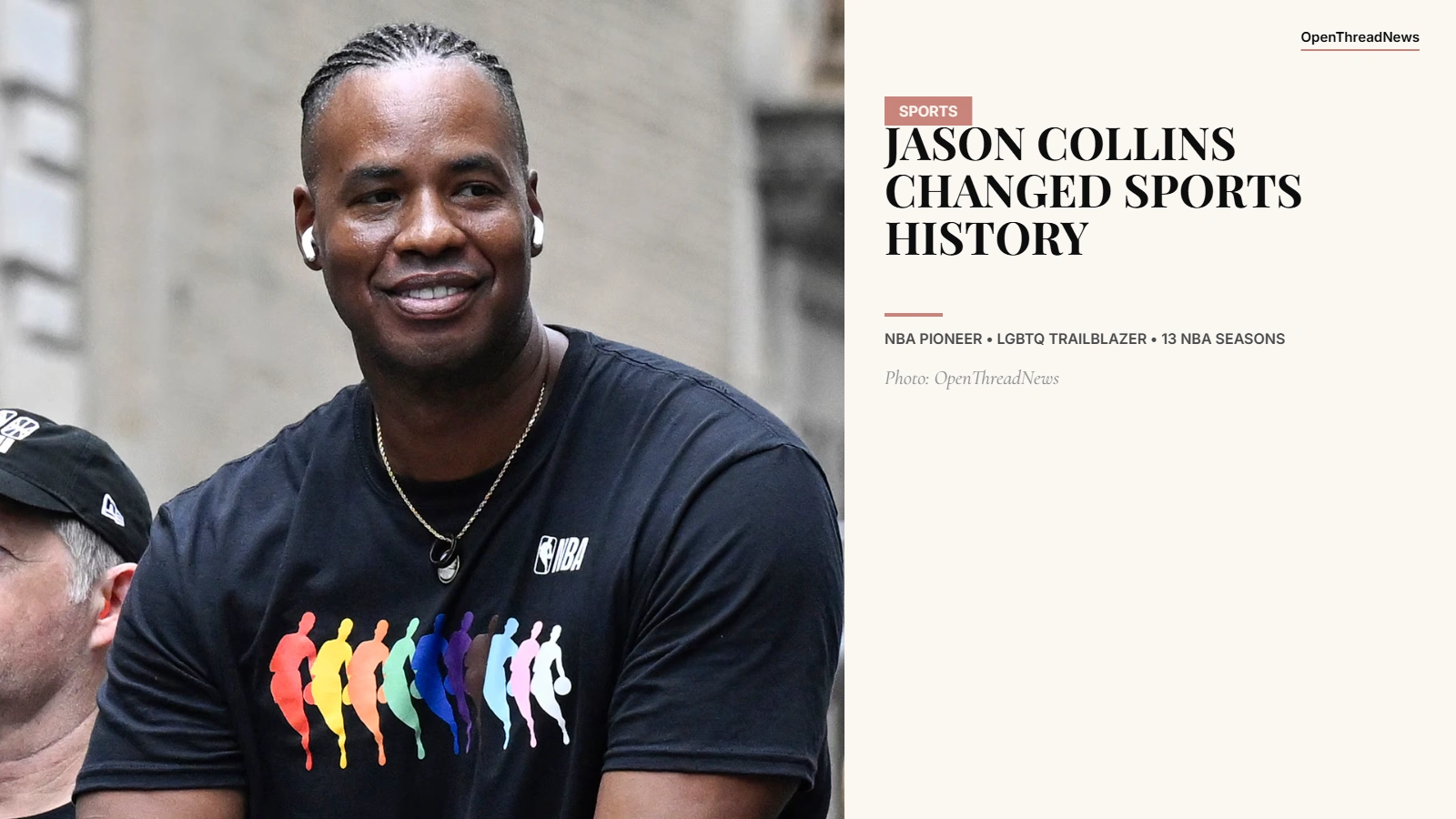
Jason Collins spent 13 seasons in the NBA setting screens and playing help defense, the unglamorous work that rarely makes a highlight reel. He’s remembered for something else. On April 29, 2013, he wrote in Sports Illustrated that he was a 34-year-old NBA center, that he was Black, and that he was gay, becoming the first active male athlete in any of the four major North American professional sports leagues to come out publicly.
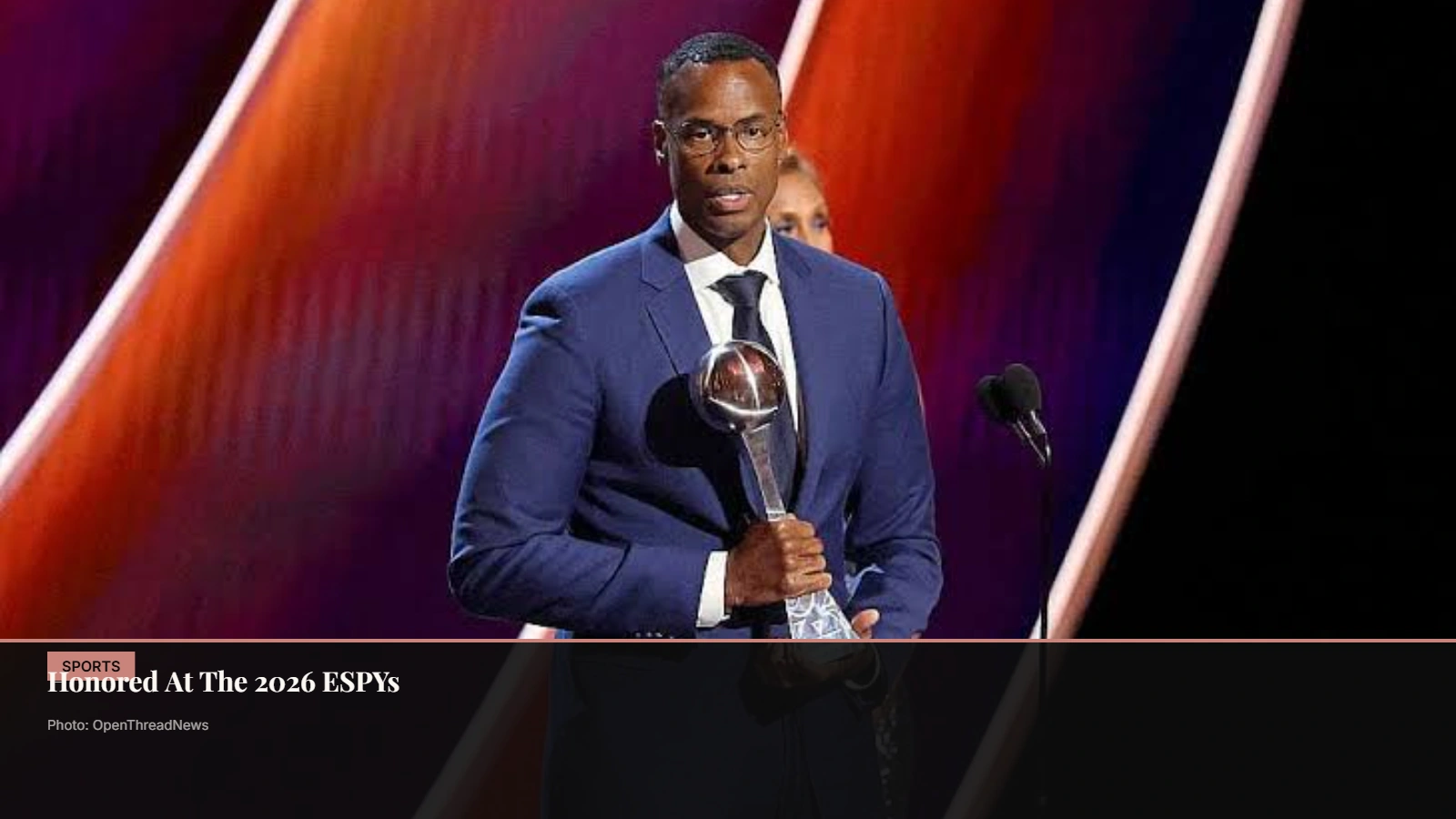
Collins died on May 12, 2026, at age 47, after an eight-month fight with Stage 4 glioblastoma. Two months later, on July 15, his twin brother Jarron stood on stage at the 2026 ESPYs and accepted the Arthur Ashe Award for Courage on his behalf, telling the crowd at Lincoln Center that his brother was “the bravest and strongest man I’ve ever known.”
Collins was born on December 2, 1978, in the Northridge neighborhood of Los Angeles, eight minutes before his twin brother Jarron. Their basketball careers ran in near-parallel for three decades: the same high school, the same college, the same NBA draft class, and eventually the same city, when both brothers ended up coaching and playing professionally within a few years of each other.
Growing Up in Northridge With a Twin Who Never Left His Side
Jason and Jarron Collins grew up together in Los Angeles and both attended Harvard-Westlake School, where they combined for a 123-10 record and two California Interscholastic Federation state titles over four years. Jason broke the state’s career rebounding record with 1,500 boards. Their high school teammate, oddly enough, was a young Jason Segel, years before he became known for Freaks and Geeks and How I Met Your Mother.
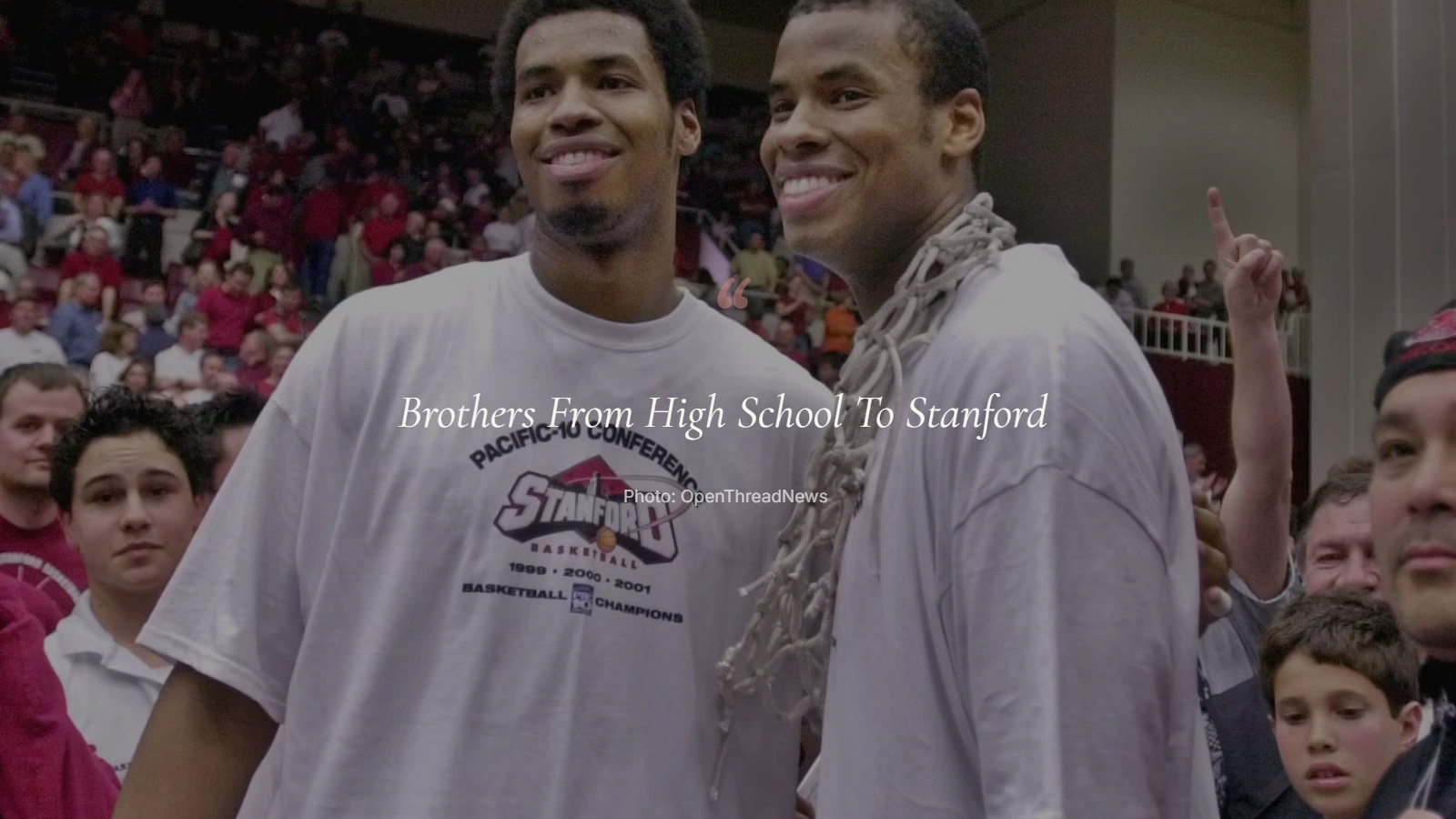
Both brothers went on to Stanford, where they played together for the Cardinal in the Pac-10. Jason left Stanford ranked first in school history in field goal percentage (.608) and third in blocked shots (89), and earned first-team All-Pac-10 honors and third-team All-American recognition from the National Association of Basketball Coaches in 2001.
A 13-Season NBA Career Built on Defense, Not Stats
The Houston Rockets drafted Collins 18th overall in the 2001 NBA draft, then immediately traded his rights to the New Jersey Nets. As a rookie alongside Richard Jefferson, he played a real role in the Nets’ first trip to the NBA Finals in 2002. He started for New Jersey through their second consecutive Finals run in 2003, when he averaged 5.7 points and 4.5 rebounds a game. Before the 2004-05 season, the Nets signed him to a five-year, $25 million contract extension.
Collins was never a big scorer. His career averages, 3.6 points and 3.7 rebounds, undersell what made him valuable: he was a physical post defender who set hard screens, boxed out consistently, and read opposing offenses well enough that then-Orlando coach Stan Van Gundy once called his defense on Dwight Howard “the best defense on him all year” during Atlanta’s 2011 playoff upset of the Magic.
| Years | Team | Note |
|---|---|---|
| 2001-2008 | New Jersey Nets | Two NBA Finals appearances (2002, 2003) |
| 2008 | Memphis Grizzlies | Traded for Stromile Swift |
| 2008-2009 | Minnesota Timberwolves | Acquired in the eight-player Kevin Love trade |
| 2009-2012 | Atlanta Hawks | Helped slow Dwight Howard in the 2011 playoffs |
| 2012-2013 | Boston Celtics | Signed as a free agent |
| 2013 | Washington Wizards | Traded midseason with Leandro Barbosa |
| 2014 | Brooklyn Nets | First openly gay athlete to play in a major North American league game |
He went unsigned for nearly a year after coming out in 2013, working out on his own with no invitations to training camp. The Brooklyn Nets, coached by his former New Jersey teammate Jason Kidd, signed him to a 10-day contract on February 23, 2014. He played 11 minutes against the Lakers that night at Staples Center, and The New York Times later called it “perhaps basketball’s most celebrated and scrutinized 10-day contract.” Collins announced his retirement that November, closing out 13 NBA seasons across seven franchises.
“I’m a 34-Year-Old NBA Center. I’m Black. And I’m Gay.”
Collins’ Sports Illustrated cover story, written with journalist Franz Lidz, ran under that exact line. He said he’d wanted to come out for years but waited until his career reached a natural pause. The story drew 3.7 million visitors to SI.com in a single day.
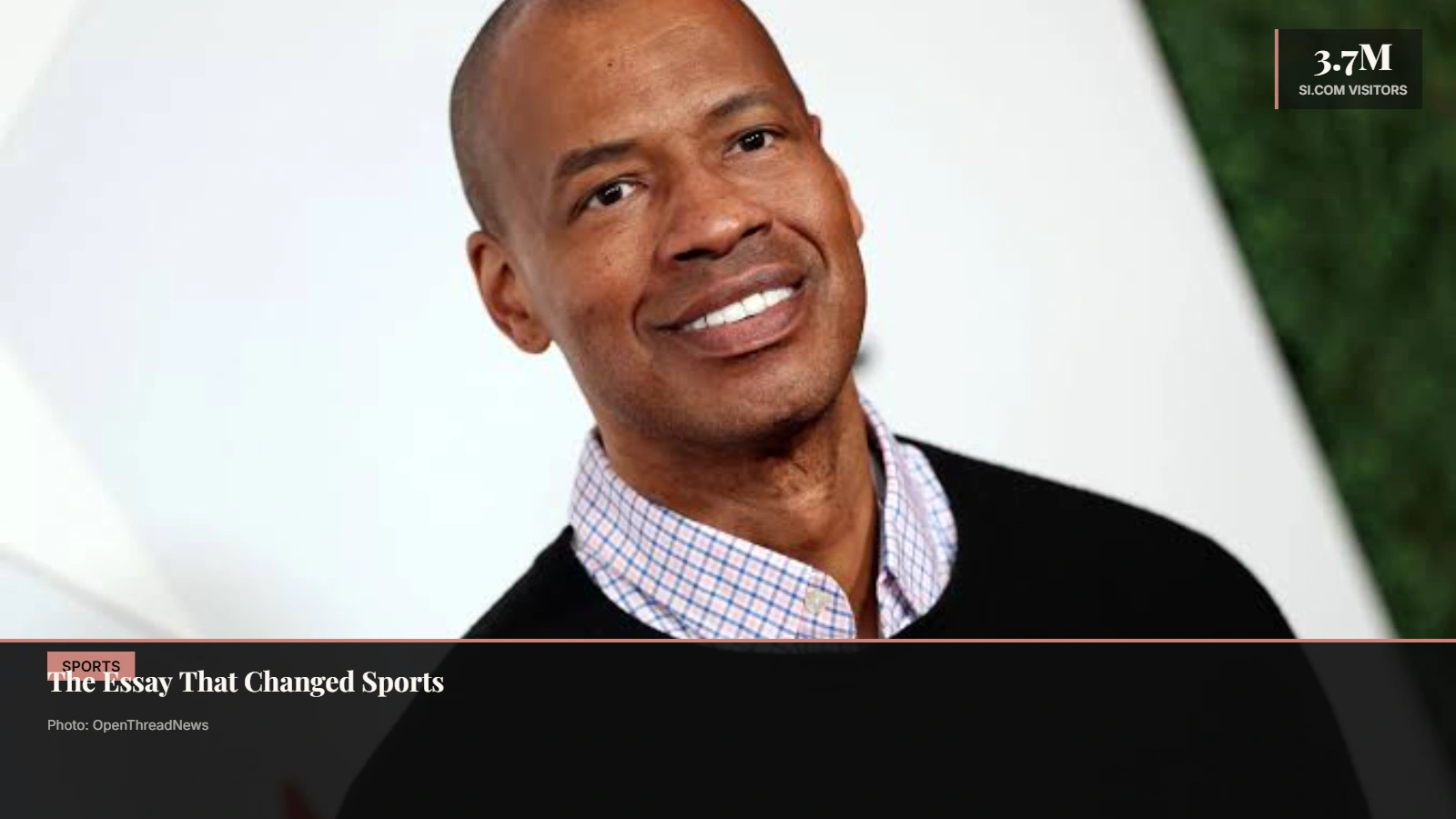
President Obama called Collins directly to tell him he was “impressed by his courage,” and said the next day at a press briefing that he “couldn’t be prouder.” Michelle Obama, Bill Clinton, Kobe Bryant, NBA commissioner David Stern, and Nike all offered public support. Not everyone agreed: ESPN analyst Chris Broussard said on air that he didn’t believe someone could be Christian and live what he called “an openly homosexual lifestyle.” Collins, who is Christian, responded directly: “This is all about tolerance and acceptance, and America is the best country in the world because we’re all entitled to our opinions and beliefs, but we don’t have to agree. And obviously I don’t agree with his statement.”
Tennis legend Martina Navratilova, who came out in 1981, called Collins a “game-changer” for team sports specifically, which she described as one of the last places where homophobia still held on. In August 2013, Collins was part of the first induction class of the National Gay and Lesbian Sports Hall of Fame. He made the cover of Time’s 100 Most Influential People in April 2014.
Wearing No. 98 for Matthew Shepard
When Collins returned to play for Brooklyn in 2014, he wore No. 98, the same number he’d worn in Boston and Washington. He chose it deliberately, in memory of Matthew Shepard, the gay college student tortured and murdered in Wyoming in 1998 in a killing that helped push the Matthew Shepard and James Byrd Jr. Hate Crimes Prevention Act into law. Collins called the number “a statement to myself, my family and my friends.”
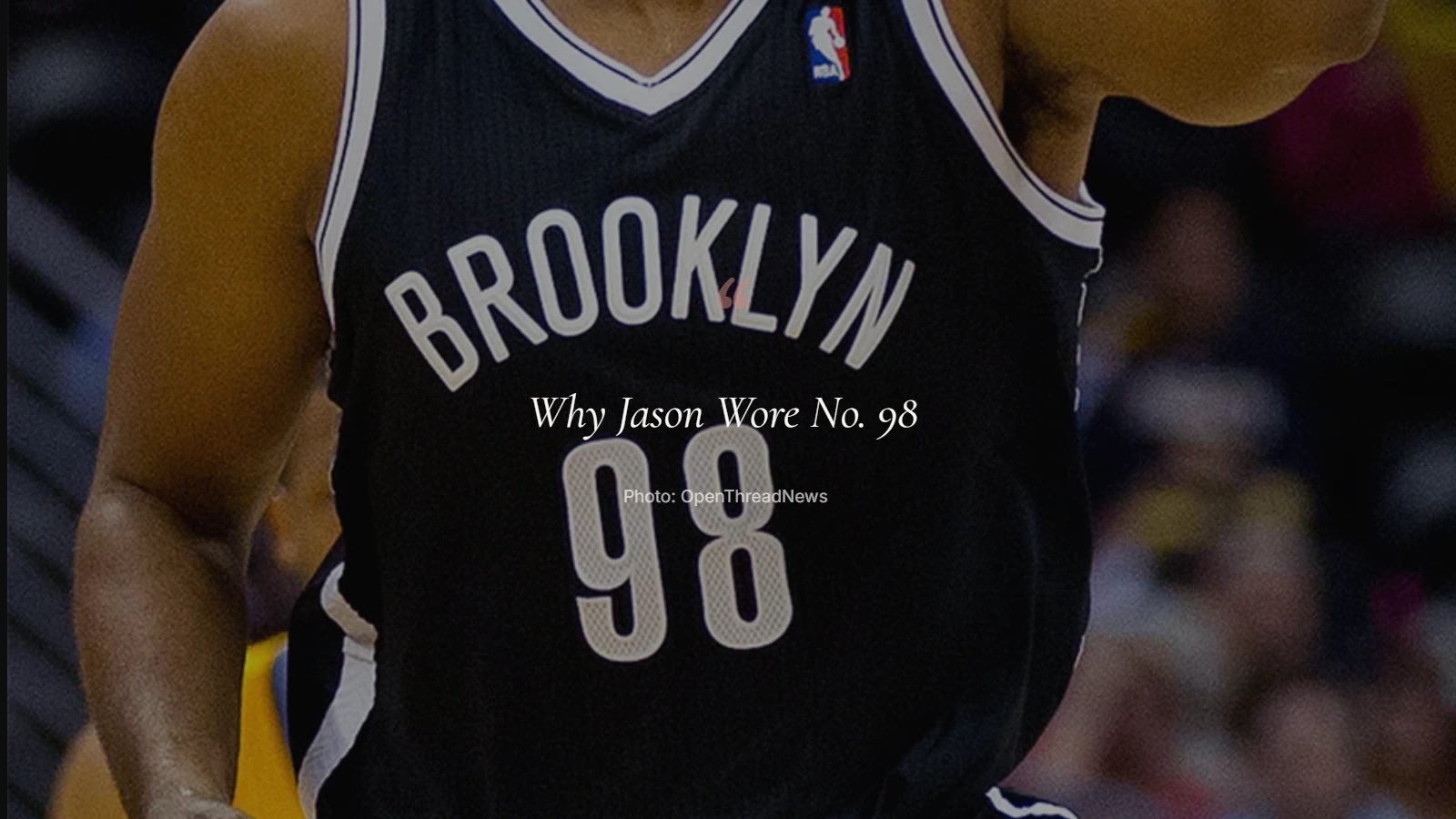
His No. 98 Brooklyn jersey became the top seller in the NBA’s online store, outselling LeBron James, Kevin Durant, and Blake Griffin that week. The league directed proceeds from jersey sales to the Matthew Shepard Foundation and GLSEN. After a Nets game in Denver on February 27, 2014, Collins personally presented an autographed No. 98 jersey to Shepard’s parents, Judy and Dennis, and his brother Logan.
Life After Basketball: Brunson Green and NBA Cares
Before he came out publicly, Collins was engaged to former WNBA center Carolyn Moos for eight years; he called off the wedding in 2009, a decision Moos later said she didn’t understand until his 2013 announcement. Collins began a relationship with film producer Brunson Green, best known for producing The Help, in June 2014. The two married in Austin, Texas, in May 2025.
After retiring, Collins worked as an NBA Cares Ambassador, representing the league at community and corporate events, and served on President Obama’s Council on Fitness, Sports, and Nutrition. He stayed visible in LGBTQ advocacy circles for the rest of his life, regularly cited as one of the athletes who made the 2010s the decade team sports stopped being, in Navratilova’s words, the last closet in American sports.
Diagnosis, Death, and a Posthumous ESPYs Honor
Only a few months after his wedding, Collins’ health changed fast. In August 2025, doctors found a baseball-sized mass in his brain after he wasn’t well enough to make a planned trip to the US Open. The NBA released a statement on the family’s behalf on September 11, 2025, confirming he was being treated for a brain tumor. On December 11, Collins wrote his own essay for ESPN revealing the specific diagnosis: Stage 4 glioblastoma, one of the deadliest brain cancers there is. He pursued treatment at a clinic in Singapore using targeted chemotherapy, aiming to slow the tumor enough for personalized immunotherapy to work.
Collins died at 47 on May 12, 2026. He is survived by his husband, Brunson Green, and his twin brother, Jarron, now an assistant coach with the New Orleans Pelicans after his own 10-year NBA playing career.
On July 15, 2026, the ESPYs honored Collins posthumously with the Arthur Ashe Award for Courage, given each year to a figure whose impact transcends sports. Jarron accepted on his brother’s behalf at the David H. Koch Theater at Lincoln Center in New York City, describing Jason’s private admiration for Arthur Ashe and closing his speech with a promise: “I pledge to make sure that tonight is not the end of my brother’s legacy. It’s just the beginning.” The full story of that night, and what Jarron said, is covered in OpenThreadNews’ report on Jason Collins’ 2026 ESPYs tribute.
Frequently Asked Questions
How did Jason Collins die?
Collins died on May 12, 2026, at age 47, after an eight-month battle with Stage 4 glioblastoma. Doctors found a mass in his brain in August 2025, and he announced the diagnosis publicly in a December 2025 ESPN essay. He received targeted treatment at a clinic in Singapore before his death.
Who was Jason Collins married to?
Collins married film producer Brunson Green, known for producing The Help, in Austin, Texas, in May 2025. The two had been together since June 2014. Before that, Collins was engaged for eight years to former WNBA player Carolyn Moos, a relationship he ended in 2009.
Why did Jason Collins wear No. 98?
Collins chose No. 98 to honor Matthew Shepard, the gay college student murdered in a 1998 hate crime in Wyoming that led to federal hate crimes legislation. He wore it with Boston, Washington, and Brooklyn, and personally gave Shepard’s family an autographed No. 98 jersey in 2014.
Is Jason Collins related to Jarron Collins?
Yes. Jarron is Jason’s twin brother, born eight minutes after him. Both attended Harvard-Westlake School and Stanford together and were both drafted into the NBA in 2001. Jarron played 10 NBA seasons and now works as an assistant coach for the New Orleans Pelicans.
What is the Arthur Ashe Award for Courage?
It’s an annual ESPYs honor for a person whose impact reaches beyond their sport. Collins received it posthumously in July 2026 for coming out as the first active gay player in a major North American men’s team sport, a distinction that changed the conversation around LGBTQ acceptance in professional athletics.