Every season of The Traitors produces the same question in the comments: this is too dramatic, too perfectly timed, too theatrical to be real. With The Traitors: New Blood, the franchise’s first all-civilian U.S. season, the skepticism has only grown. The 22 everyday Americans playing for up to $250,000 bring no reality TV experience with them, yet the betrayals, blindside votes, and Round Table showdowns look as polished as ever. Our The Traitors: New Blood season guide tracks the game itself; this piece answers a different question.
So is it real? The people who make the show have addressed that directly, on the record, more than once. Here is what they say, separated into what is unscripted and what is not.
The short answer
Nobody on the production side claims the show is unfiltered reality, and nobody involved claims the players follow a script. The consistent on-record position is that the format, the missions, and the filming logistics are planned in advance, while the votes, the murders, the alliances, and the reactions belong entirely to the contestants. The game is structured like a board game; what happens inside the structure is not.
What Alan Cumming says
For New Blood specifically, Cumming has not claimed the season is scripted, quite the opposite. Speaking with reporters after the Emmys, where he had just won his third straight hosting Emmy, he said the civilian cast made the show wilder than the celebrity editions. “We thought we’d kind of tone it down a little and sort of slightly reboot because we’re going to do it with ordinary Americans,” he told reporters, as reported by Primetimer. “It’s not at all calmed down. It failed.”
He told TV Insider, via Thought Catalog, that the newcomers’ lack of TV experience makes them more genuine, not less: “They’re completely immersed in that world because they don’t have the experience of being on a set. They take it more seriously.” For everyday people, he added, “it’s a huge amount of money [that] changes lives. So, in the missions, they are fighting much more for the pot.” His summary of filming: “There’s a lot of screaming.”
At the franchise level, Cumming has addressed fan conspiracy theories directly. In an interview with The Playlist, reported by Reality Tea, he pushed back on the idea that production manipulates outcomes to save popular players: “These things take months of preparation. And so, these things were all planned.” The key distinction he drew is between planned structure and planned results: “Obviously, the things that change are little, interpersonal things. And, of course, people dying or being murdered, and the group turning on people.”
What the producers say
Executive producers Sam Rees-Jones and Mike Cotton, the Studio Lambert team behind the show, have been even more specific. In a January 2026 interview with The Playlist about the U.S. series, Rees-Jones said of eliminations: “I will never [predict a boot order] because we will always get it wrong. We go into every round table, every turret, never knowing what the outcome is.” He added: “We never know what’s going to happen, and it takes us by surprise. We hope it will take the viewers by surprise.”
That is not a vague denial; it is a practical claim. If production were steering votes, predicting eliminations would be the easiest part of their jobs.
In an NBC Insider interview, Rees-Jones also described how the planned parts are built. Missions are designed in advance, tested, and vetted with psychologists and a welfare team: “That takes paramount over having entertainment within a mission.” Contestants take personality tests before filming, and Rees-Jones revealed that the Traitors are not picked until shortly before the game begins: “We didn’t actually pick who the Traitors were until a couple of hours before the Roundtable when Alan taps them on the shoulder.”
The strongest official statement came from the U.K. edition in January 2026, when an anonymous tabloid source alleged producers had staged a confrontation. A show spokesperson told outlets including Edinburgh Live: “To suggest any staging, scripting, player preference, or interference otherwise is categorically untrue. Players each have their own strategies, and we follow their interactions and the game play as it unfolds.”
What contestants say
The most quoted line on this subject does not come from Cumming at all. It comes from Alex Gray, a U.K. series 1 contestant, who told The Tab in a TikTok Q&A: “Obviously a handful of us are actors in real life, but none of us are paid actors on the show. Everything you’re seeing is real, none of it is scripted, none of us were told what to do and none of us were told what to say.” She added that the intensity comes from the conditions: “I can’t explain to you how heightened and high octane the emotion was in there because you’re so paranoid and sleep deprived and anxious. Everything is real!”
Wilf Webster, another U.K. contestant, told Heatworld that producers gave almost no direction: “When the assistant director opened the castle doors, they just went ‘go into reality’. And that was it. So, we had no direction or anything like that and it just felt so natural. We forgot about the cameras.” He also revealed that contestants are not even told how the game ends until late in filming.
New Blood’s own eliminated players sound the same note, even if they are not addressing the scripting question directly. Logan Smith told Parade he walked in with “absolutely no plan whatsoever,” and admitted he was genuinely surprised by his murder. Kim Daily told Parade she was “shocked to high heavens” when her murder letter arrived, because she believed she was about to be recruited. Shocked people are not reading scripts.
What is actually planned and structured
Being unscripted is not the same as being unstructured. Plenty of the show is deliberately constructed, and the producers are open about it. Our full guide to how the game works covers the rules; here is the production side.
The missions are designed, tested, and sometimes rehearsed for safety long before filming. The Round Table format, the murder letters, the breakfast reveals, and the turret meetings are fixed elements of the format. Cumming’s monologues are written and performed, and he told NBC Insider he helped create his theatrical hosting persona from the first season.
The filming logistics are also more manufactured than they appear. According to The Tab’s behind-the-scenes reporting on the franchise, the turret where Traitors meet is a set, contestants do not sleep in the castle but in a nearby hotel, and murders are not carried out at night. Instead, the condemned player learns their fate the next morning in an interview room, one of several identical rooms set up so contestants cannot overhear each other. Nobody is actually dying at midnight; someone is getting an envelope at 9 a.m. The game is real, but the gothic staging around it is television craft.
| Planned in advance | Left to the players |
|---|---|
| Format, missions, and filming logistics | Votes, murders, alliances, and reactions |
| Missions designed and tested with psychologists | Round Table outcomes |
| Traitors chosen hours before the first Round Table | Who gets banished or murdered |
How this compares to standard reality TV
Every reality show edits. Conversations filmed over hours are compressed into minutes, and editors choose which moments define each episode. That is standard practice across the genre, and The Traitors is no exception. What separates scripted-feeling shows from The Traitors, according to its makers, is who decides the outcomes. The show’s official line, repeated across editions, is that producers build the arena and then “follow their interactions and the game play as it unfolds.”
That is a meaningful claim because it is falsifiable. If a vote were rigged or a murder were pre-decided, the producers’ own stated inability to predict eliminations would collapse. Whether you find the show’s drama believable is a matter of taste, but the people with the most to lose by lying about it keep saying the same thing: the structure is planned, the game is not.
Frequently Asked Questions
Is The Traitors: New Blood scripted?
No, according to the host, producers, and contestants who have addressed it on the record. Host Alan Cumming and executive producers Sam Rees-Jones and Mike Cotton have all said on the record that contestants are not told what to say or do, and that votes, murders, and banishments are decided by the players. The missions, format, and filming logistics are planned in advance, but the gameplay itself is not scripted.
Do producers tell the contestants what to say?
Contestants consistently say no. Alex Gray told The Tab that “none of us were told what to do and none of us were told what to say,” and Wilf Webster told Heatworld the cast received no direction once filming began. The one acknowledged exception is logistical: producers sometimes reposition players for filming purposes.
Are the murders and the Round Table votes real?
The votes are genuinely cast by the contestants, and the Traitors genuinely choose each murder. Executive producer Sam Rees-Jones told The Playlist that production goes “into every round table, every turret, never knowing what the outcome is.” New Blood players like Logan Smith and Kim Daily have described being genuinely surprised by their own eliminations in Parade exit interviews.
Is the castle real? Do contestants actually stay there?
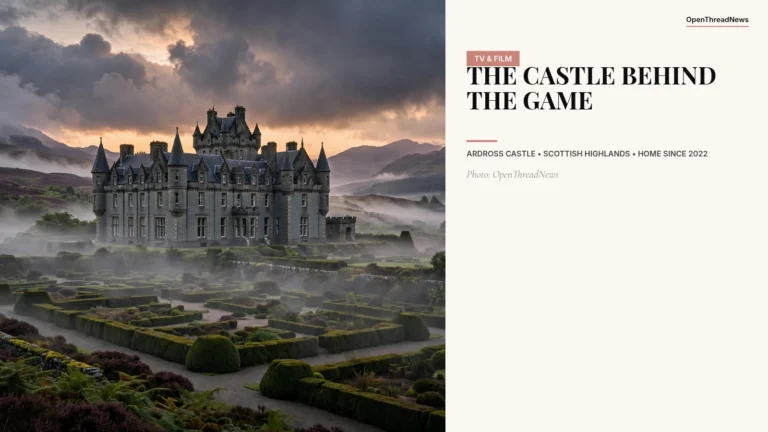
Ardross Castle in the Scottish Highlands is a real filming location, and the missions, Round Tables, and breakfasts are filmed there. But contestants do not sleep in the castle. Per franchise reporting from The Tab, the cast stays in a nearby hotel, and even the turret where Traitors meet is a set. The 22 everyday Americans in our New Blood cast hub were isolated from the outside world during filming, with phones confiscated.
Is The Traitors filmed live?
No. The season is filmed in advance over several weeks, then edited and aired weekly on NBC, streaming the next day on Peacock. This is why eliminated contestants can give exit interviews to outlets like Parade while the season is still airing.