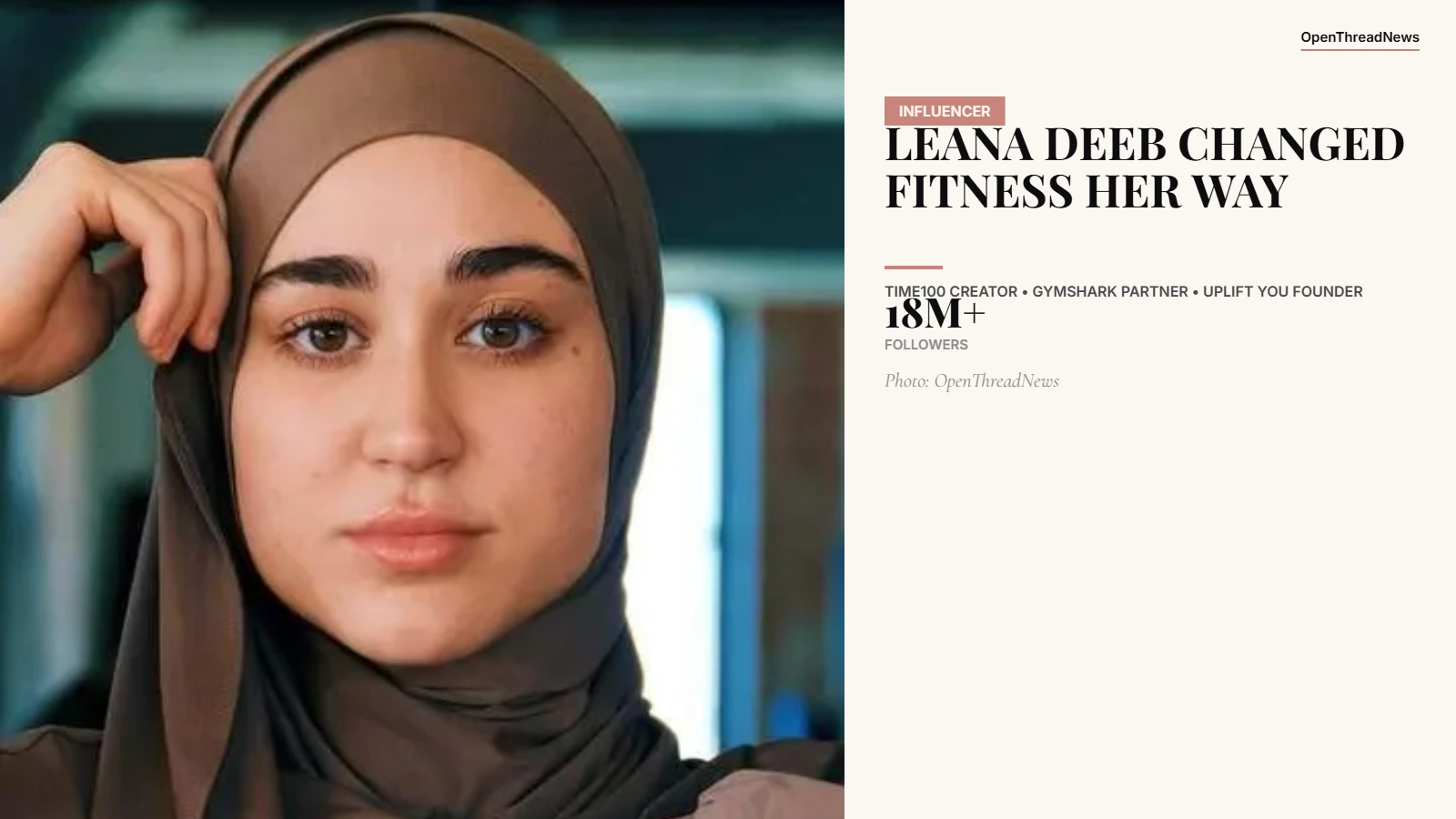
In April 2025, TIME magazine dropped its annual TIME100 Creators list — the kind of recognition that signals someone has stopped being just an influencer and started being something closer to an industry. Among the names was Leana Deeb, a 25-year-old fitness creator from Austin, Texas, whose path to that list didn’t follow the standard influencer playbook.
Most fitness creators chase leaner physiques, flashier brand deals, and ever-more-revealing activewear drops. Deeb moved in the opposite direction. In Ramadan 2023, she started wearing hijab — a decision that could have alienated the audience she’d spent two years building. Instead, it clarified something. Her follower count kept climbing. Her brand partnerships got bigger. By the time TIME called, she’d crossed 18 million followers across TikTok, Instagram, and YouTube combined, signed a collection deal with Gymshark, and launched her own personal-growth platform called Uplift You. She was also named to Forbes’ 30 Under 30 list for 2026. She was also named to Forbes’ 30 Under 30 list for 2026. She was also named to Forbes’ 30 Under 30 list for 2026. She was also named to Forbes’ 30 Under 30 list for 2026.
The “hijab fitness girl” label gets applied to her a lot, and it’s not inaccurate — but it’s also not the full story. Deeb didn’t just add a headscarf to her existing content. She rebuilt her public identity around discipline, faith, and self-development, and in doing so, tapped into an audience that had been waiting for someone who looked like them to show up in a space that rarely made room.
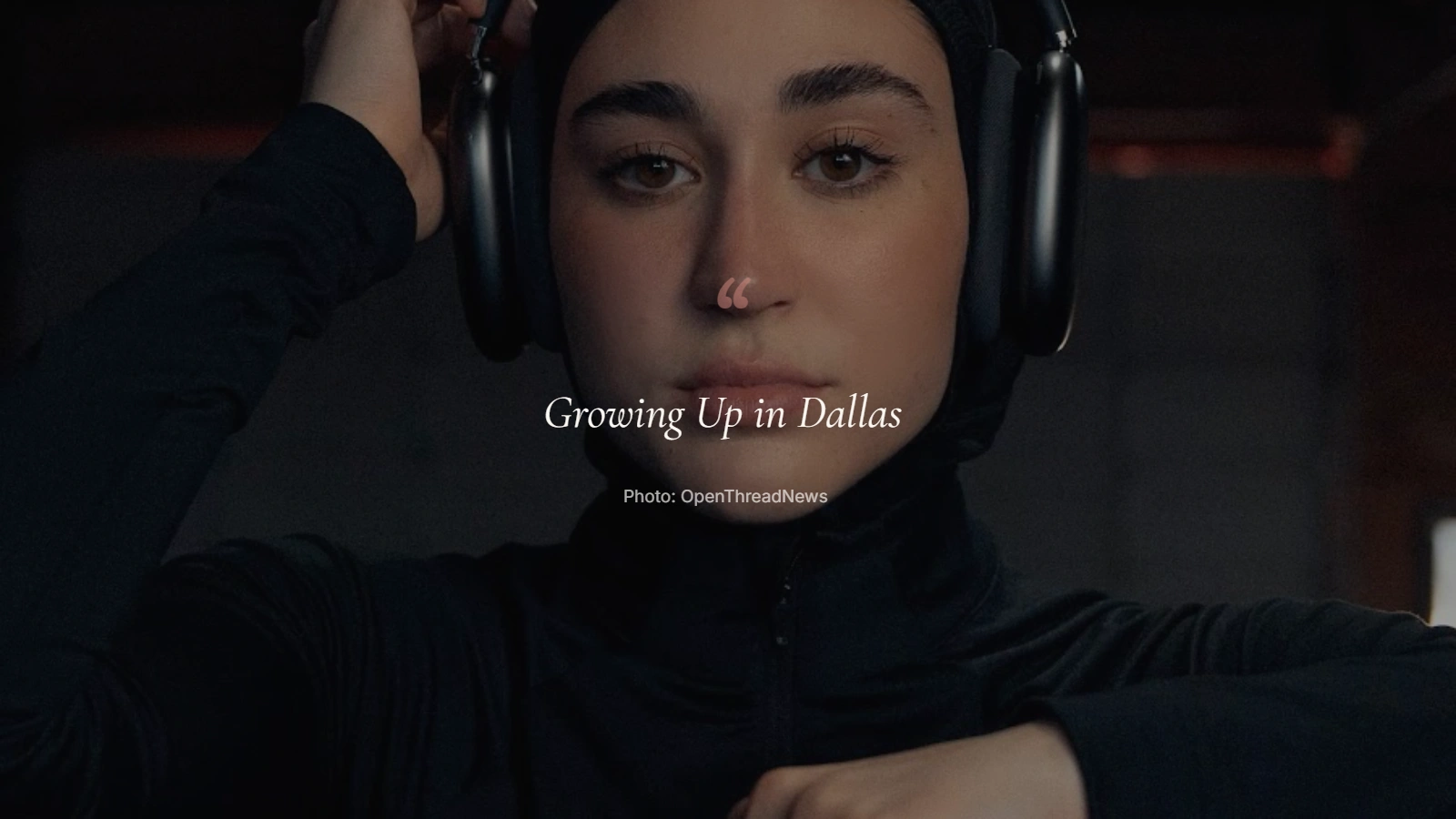
Growing Up in Dallas
Leana Deeb was born on July 13, 2001, in Dallas, Texas. Her background is Palestinian-Uruguayan — a dual heritage TIME specifically called out in its profile, and one that sets her apart in the U.S. fitness-creator landscape, which is still overwhelmingly white and monolingual.
Details about her family life are sparse. She appears to have a sister — a TikTok post referencing a sister’s wedding made the rounds — but Deeb hasn’t made family content a pillar of her platform, and her parents’ names and occupations aren’t publicly documented in any verifiable way. That absence of family-forward content is notable in an ecosystem where “meet my parents” videos reliably perform. Deeb’s brand has always been more interior than that — focused on her own routines, her own discipline, her own spiritual and physical growth.
Some bio sources claim she studied kinesiology at the University of Texas at Austin and earned a bachelor’s degree, but Deeb herself hasn’t publicly confirmed this in interviews or on her platforms. What’s visible is that she ended up in Austin — a city with a growing Muslim community and a robust fitness culture — and that’s where she built her career.
The Video That Started Everything
Before the hijab, before the Gymshark collection, before TIME, there was a full-body workout routine posted to TikTok in October 2021.
That video went viral. In the crowded, chaotic world of fitness TikTok — where everyone with a ring light and a set of resistance bands was posting “5 moves for abs” — Deeb’s video cut through. The production wasn’t especially polished. What grabbed people was the clarity of her instruction and the intensity of her own effort. She wasn’t performing a workout for the camera; she was doing one, and bringing the viewer along.
Growth came fast after that. Her TikTok handle became a go-to for straightforward, effective workout content — no gimmicks, no fad diets, no shaming language. She posted routines. She posted nutrition advice. She posted motivational voiceovers that sounded less like a coach and more like an older sister who’d figured some things out.
By 2022, she was solidly in the mid-tier creator category — big enough to get noticed by brands, not yet big enough to get profiled by magazines. That changed quickly.
The Hijab Decision
Ramadan 2023 was the pivot point.
Deeb had always identified as Muslim, but her public practice deepened during that month. She began wearing hijab — a visible, permanent marker of religious commitment that millions of people would immediately notice. For a fitness creator whose content had previously included the standard gym-uniform aesthetic (sports bras, leggings, exposed arms and hair), this wasn’t a subtle shift.
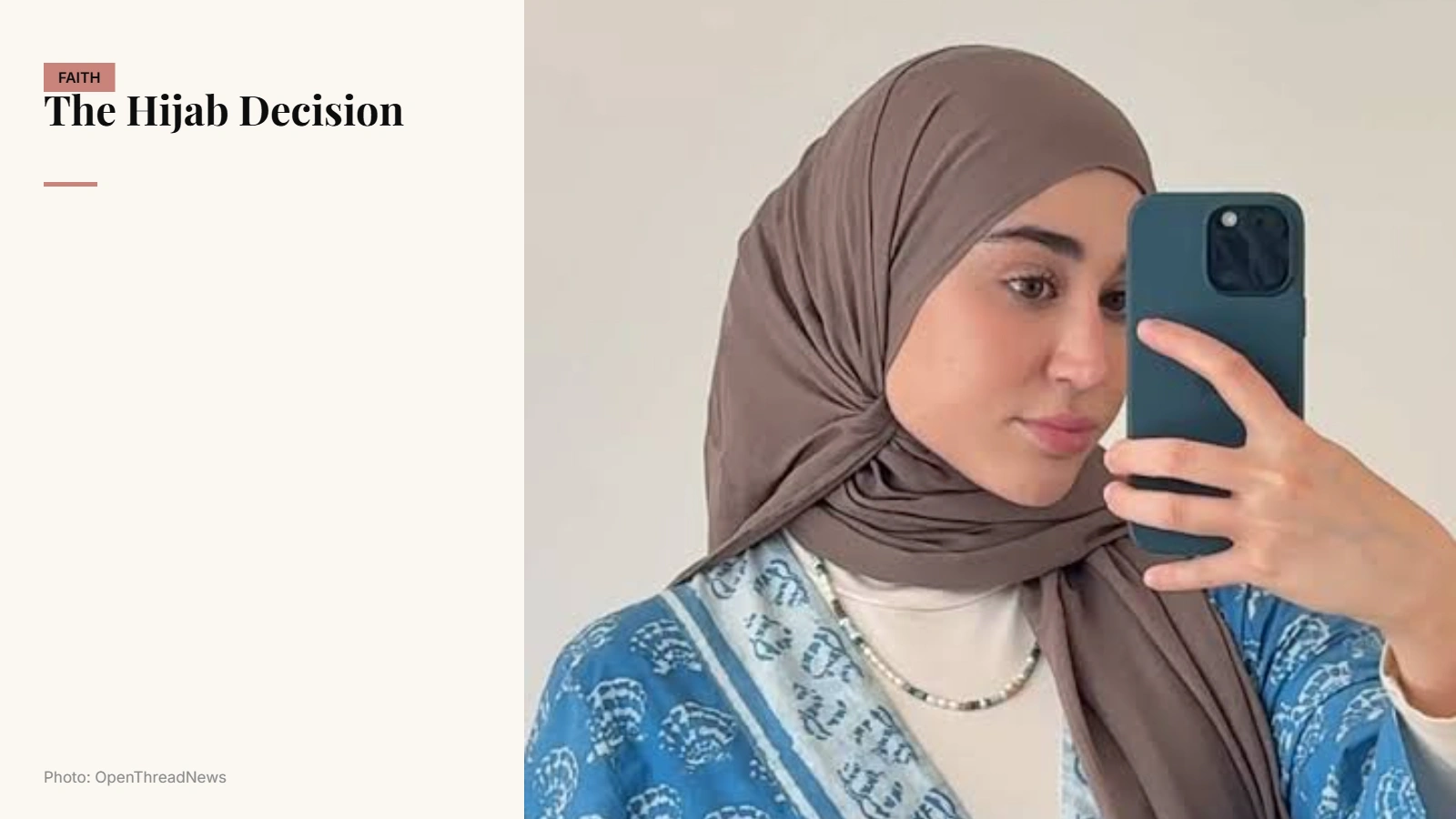
The internet noticed. Searches for “Leana Deeb before hijab” spiked, and they haven’t really stopped since. Some commenters were supportive. Others were confused. A segment of her audience — the kind that follows fitness creators for reasons that have nothing to do with fitness — made their disappointment known and then presumably unfollowed.
What happened next is what makes Deeb’s trajectory worth studying. She didn’t lose momentum. She gained it. The modest-activewear niche had been underserved for years, and Deeb — young, disciplined, already established — walked right into the center of it. Brands that wanted to reach Muslim women and modest-dressing fitness consumers now had an obvious partner. Her content shifted to incorporate more lifestyle and personal-growth themes alongside the workouts. The discipline of faith and the discipline of fitness started to sound like the same conversation.
TikTok Career and Content Style
Deeb’s content today sits at the intersection of three lanes: fitness instruction, modest-fashion inspiration, and motivational personal-growth content. A typical week on her TikTok might include a gym routine filmed in loose-fitting activewear and hijab, a “what I eat in a day” video structured around whole foods and high protein, and a voiceover about discipline or self-respect that could double as a sermon snippet.
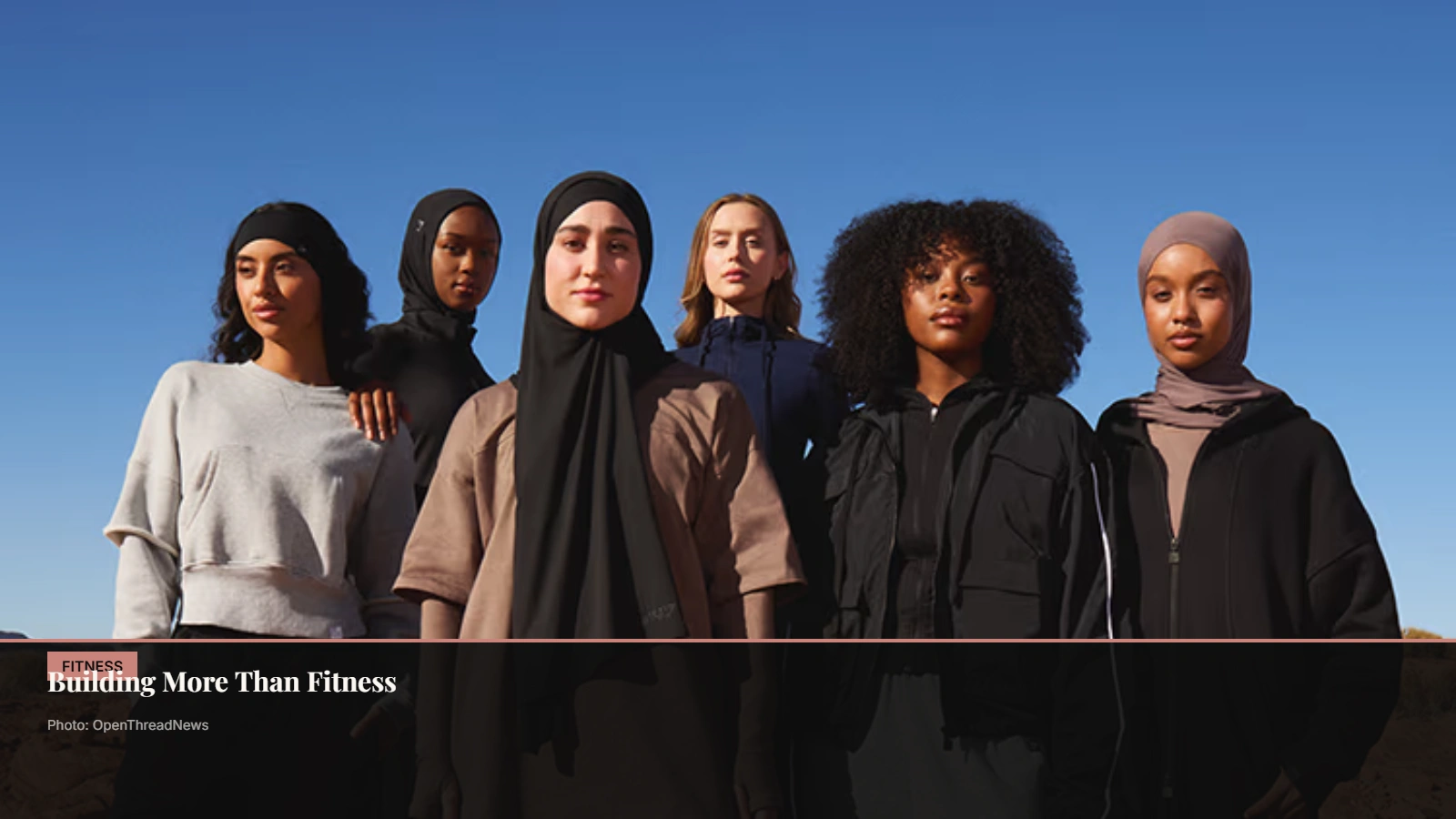
The aesthetic is clean, warm-toned, and intentionally calm. Where many fitness creators rely on high-energy cuts, flashing text, and urgency-driven captions (“DO THIS NOW”), Deeb’s videos feel unhurried. She explains exercises. She shows modifications. She talks about mindset in a way that treats the viewer as someone who’s building something long-term, not chasing a 30-day transformation.
That tone is part of why her brand partnerships work. Gymshark didn’t just sponsor her — they built a collection with her, featuring modest-cut activewear designed to be functional and fully covering. The partnership included in-person event tours in Dallas, New York, and Los Angeles, where Deeb led workouts for crowds of women, many wearing hijab themselves. Fellow Gymshark athlete Whitney Simmons has built a similarly loyal fitness audience through the brand. Fellow Gymshark athlete Whitney Simmons has built a similarly loyal fitness audience through the brand. Fellow Gymshark athlete Whitney Simmons has built a similarly loyal fitness audience through the brand. Fellow Gymshark athlete Whitney Simmons has built a similarly loyal fitness audience through the brand. For a brand that built its reputation on skintight silhouettes and exposed midriffs, the Deeb collaboration was a notable expansion of who they considered their customer to be.
Bloom Nutrition also partnered with her, according to secondary reports, and she’s the founder and CEO of Uplift You, a personal-growth platform and app that extends her brand beyond social media into the direct-to-consumer wellness space.
What Reddit Actually Says
Reddit’s fitness and creator-discussion communities have been talking about Deeb for a while, and the tone is more complicated than the comments on her own posts.
On subreddits like r/gymsnark, where fitness influencers are scrutinized for authenticity, the conversation around Deeb tends to split into two camps. One side views her as genuinely principled — a creator who made a difficult public change and stuck with it. The other side questions whether the hijab pivot was partly strategic, noting that the modest-activewear niche had clear market opportunity and that Deeb’s rebrand opened doors that might not have been available otherwise.
The truth, as usual, is probably less cynical than the skeptics think and less pure than the stans believe. Deeb did make a real religious commitment — wearing hijab full-time as a public figure with millions of followers is not a casual decision, and the scrutiny that comes with it isn’t something anyone would choose lightly. She also benefited from timing. The modest-fashion market has been growing for years, and fitness brands had been slow to serve it. When Deeb positioned herself at that intersection, she wasn’t just following a trend — she was one of the first major fitness creators to occupy the space at scale.
Those “before hijab” searches tell the story of an audience trying to reconcile two versions of the same person. Deeb’s answer, implicit in everything she’s posted since Ramadan 2023, is that there was never really a contradiction — just a public evolution that most creators never have to make so visibly.
How Much Is Leana Deeb Worth?
Any net worth figure you see attached to Deeb should come with a disclaimer: private companies do not open their books, and creators with multiple income streams are notoriously hard to value from the outside. That said, the available data points suggest she is doing very well.
One older bio-site estimate placed her net worth at around $2 million, but the sourcing is thin and the timeline is unclear. More concrete is HypeAuditor data from May 2026, which estimates her Instagram earnings alone at roughly $15,700 to $21,500 per month. That is just one platform. TikTok brand deals, YouTube ad revenue, and her Gymshark collection, which likely includes royalties or a partnership fee, would push her overall earnings significantly higher.
Uplift You adds another layer. Subscription-based wellness apps can generate substantial recurring revenue at scale, and Deeb owns this one. Even a conservative estimate, with modest subscriber numbers paying a standard monthly fee, suggests the app alone could be generate six figures in annual revenue.
Her lifestyle also aligns with someone earning well without displaying excessive wealth. Much of her travel, including Gymshark tours, is work-related. She is based in Austin, a city with a lower cost of living than Los Angeles or New York while still offering a strong creator ecosystem. Her content does not showcase luxury cars or extravagant real estate. Instead, her public spending appears focused on her business, fitness, and faith, which is consistent with the personal brand she has built.
What’s Next for Leana Deeb
The TIME100 recognition in 2025 changed the conversation around Deeb from “successful fitness creator” to “someone building an institution.” That’s the trajectory worth watching.
Uplift You is still relatively young, and if it scales — through partnerships, content expansion, or integration with wearables and fitness tracking — it could become a standalone business that doesn’t depend on Deeb’s face on a TikTok feed. The Gymshark relationship also looks like it has room to grow; successful creator-brand collections often expand into multiple drops or permanent lines. Deeb has also launched a weekly podcast, “Hi, my name is Leana Deeb…,” extending her personal-growth content into audio. Deeb has also launched a weekly podcast, “Hi, my name is Leana Deeb…,” extending her personal-growth content into audio. Deeb has also launched a weekly podcast, “Hi, my name is Leana Deeb…,” extending her personal-growth content into audio. Deeb has also launched a weekly podcast, “Hi, my name is Leana Deeb…,” extending her personal-growth content into audio.
The broader trend is on her side. Modest activewear has gone from niche to notable, and the brands that got in early are now competing with each other for shelf space. Deeb, as one of the most visible faces of the movement, has leverage she didn’t have three years ago.
The question is whether she’ll stay in the fitness lane or expand further into the personal-growth and faith-based lifestyle space — a much bigger market with fewer clear leaders. If the past three years are any guide, she’ll do both, and she’ll do it at her own pace, with the same unhurried confidence that’s been working since that first workout video in 2021.
Frequently Asked Questions
How old is Leana Deeb?
Leana Deeb was born on July 13, 2001, making her 25 years old.
When did Leana Deeb start wearing hijab?
She began wearing hijab during Ramadan 2023, publicly framing it as part of a deeper embrace of her Muslim faith.
What is Leana Deeb’s ethnicity?
She is Palestinian-Uruguayan, a dual heritage that TIME specifically noted in her 2025 TIME100 Creators profile.
Is Leana Deeb married?
There is no verified public information confirming a spouse or relationship status. References to a husband found online are not supported by credible sources.
What is Leana Deeb’s net worth?
Estimates vary. Older reports suggested around $2 million, while HypeAuditor data from May 2026 estimates her Instagram earnings at roughly $15,700 to $21,500 per month. These estimates do not include TikTok, YouTube, brand deals, or revenue from her Uplift You app.
What is Uplift You?
Uplift You is a personal growth platform and app founded by Leana Deeb, focused on self-development, discipline, and wellness.
Does Leana Deeb have a deal with Gymshark?
Yes. Gymshark has released a Leana Deeb collection featuring modest-cut activewear, and she has appeared at Gymshark event tours in multiple U.S. cities.